
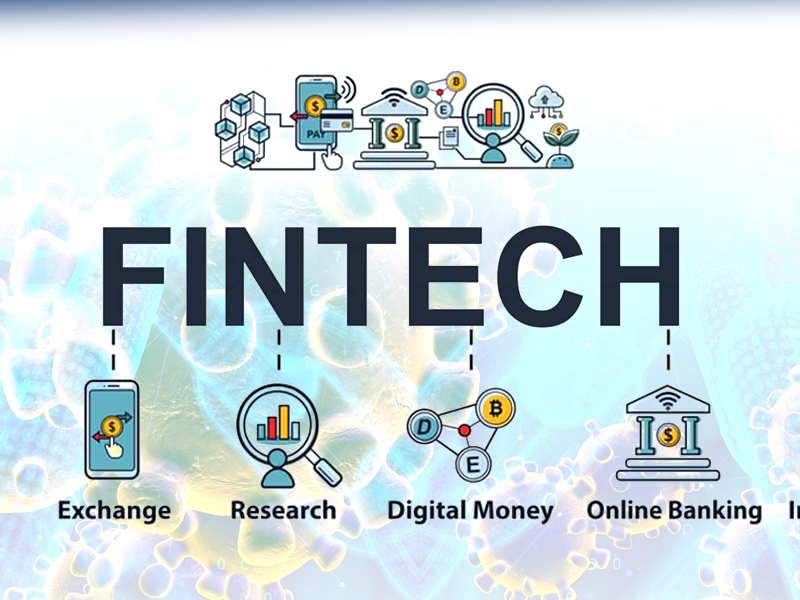
Fintech investment is predicted to expand at a faster rate in 2022, reaching $310 million. And this is despite a steep drop in investment due to Covid-19 lockdowns and restrictions. Most industries were affected by the pandemic, but not FinTech.
During the COVID-19 lockdowns, users were more likely to use Fintech services than traditional banking services. By 2021, three out of every four people on the planet had used Fintech apps to transfer money. Fintech adoption among small and medium-sized businesses (SMEs) is now at 25% and is expected to reach 64% in the near future.
By 2023, the Fintech industry is predicted to be worth US$158 million, and by 2030, it will be worth US$325 million. However, other experts believe that the fintech business will grow even faster in the following decade.
This article will discuss for key drivers behind FinTech industry’s growth.
Technological Revolution
The products/services offered by the FinTech industry rely upon technologies like artificial intelligence (AI), machine learning (ML) to automate manual processes. Fintech companies use algorithms and machines instead of humans to perform specific tasks like alerting the compliance team when a suspicious transaction occurs.
Fintechs can hire fewer staff while maintaining a high level of productivity, as well as save money on office space. In addition, staffing and local branch savings can be translated into lower service prices, making FinTech products appealing to a wider audience.
PayTM in India, Monzo Bank in the United Kingdom, and Remitly in the United States are examples of the top FinTech companies providing direct access to financial services, solving the problem of financial exclusion in both developed and under-developed countries.
By 2025, the worldwide AI fintech market is expected to reach $22.6 billion.
Customer Expectations
The global financial crisis (GFC) of 2008-09 revealed various loopholes in the existing centralized banking systems, such as a lack of transparency about public funds, poor regulations, and high transaction charges. As a result, Satoshi Nakamoto created a peer-to-peer transaction system in the form of Bitcoin, which is a decentralized virtual currency.
Since the introduction of Bitcoin and other cryptocurrencies, the users’ interest has inclined towards digital financial services. The shift is also triggered by the COVID-19 pandemic, which disrupted traditional banking activities.
According to Yahoo Finance, the overall number of crypto users was close to 230 million last year, around July 2021. As August approached and the crypto market recovered, the same amount jumped to 263 million. The global crypto market had roughly 295 million users by the end of 2021.
Crypto adoption accelerated in 2021, with firms such as Tesla and Mastercard expressing interest, and El Salvador became the first country to recognize Bitcoin as legal money.
According to Allied Market Research, the worldwide cryptocurrency market would reach $4.94 billion by 2030, more than tripling its predicted size of $1.49 billion in 2020. The major drivers include greater openness in the global payments system and increased demand for international remittances.
Regulatory Support
Regulations, in general, can make entrepreneurship more difficult. Although the financial technology business is subject to regulatory requirements, many are less stringent than those imposed on fully registered banks. As a result, financial technology firms can introduce new financial products with greater speed.
Furthermore, several governments promote digital banking. For example, the UK Competition and Markets Authority ordered nine of the country’s top banks to provide licensed startups access to transaction data in 2016. This paved the path for other FinTechs to arise, providing users with new methods to manage their funds through their smartphones.
Many countries have taken the lead to regulate the crypto industry, like Singapore, Germany, the United States, United Kingdom.
Singapore has always been at the forefront of technological advancement and adoption in Asia. Similarly, the country has taken a favorable stance on cryptocurrency. To govern cryptocurrencies and encourage their acceptance, the Blockchain and Cryptocurrency Regulation 2020 was signed.
Cryptocurrencies in Germany are regulated by the German Federal Financial Supervisory Authority (BaFin) and can be used for payment. The Financial Crimes Enforcement Network (FinCEN) considers virtual currencies as money transmitters in the United States. The Internal Revenue Service (IRS), on the other hand, views cryptocurrencies as a form of digital property. The Financial Conduct Authority (FCA) of the United Kingdom has replaced its current Gabriel reporting system with RegData, a new platform that makes sending data easier because it is more adaptable.
Industry Evolution
FinTechs have grown fast in recent years, and the industry is now entering a new phase. With no signs of slowing down, the industry’s reach is set to expand swiftly to include even more cutting-edge technologies and services, dissolving the lines that currently divide financial services.
As companies got more sophisticated and gained more access to capital, the financial technology sector evolved, allowing them to scale and reinvent banking products and services.
In 2016, the Prudential Regulatory Authority (PRA) and the Financial Conduct Authority (FCA) gave Starling Bank (once FinTech unicorn) a banking license, making it the first digitally-native mobile challenger bank to strike the UK.
If the current trend continues, some aspects of FinTech are likely to infiltrate a broad path of the global economy, much like digital technology has become a must rather than an option for every organization.